
Alternatives
Best Music Theory for Computer Musicians alternatives in 2026
Music Theory for Computer Musicians is music theory for people who write music with software and MIDI. These 11 alternatives come from the same rankings, ordered by editorial score. Connected products carry a small, disclosed lift.

Ranked alternatives
- 1
Open Music Theory
Has a free option. The strongest option here and the only one free to read in full. It covers fundamentals through chromatic harmony in one openly licensed online text, though print textbooks suit classroom use better.
Best for Free online study from fundamentals to chromatic harmony
Read onlineFree
- 2
The Complete Musician
An integrated undergraduate course that combines harmony, analysis, ear training and performance. It is broader than Tonal Harmony, so it offers less depth in harmony alone, which keeps it second.
Best for Undergraduate courses combining harmony and performance
PrintPaid
- 3
Tonal Harmony
The standard undergraduate text on common-practice harmony, with workbook exercises sold separately. It covers harmony alone, so it ranks below The Complete Musician for a combined course.
Best for Undergraduate study of common-practice harmony
PrintPaid
- 4
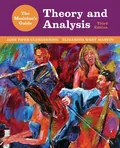
The Musician's Guide to Theory and Analysis
A tonal theory and analysis textbook with video tutorials and online formative exercises tied to each chapter. It is broader than Tonal Harmony, but it ranks below The Complete Musician for a combined course.
Best for Theory and analysis with online exercises
PrintPaid
- 5
Harmony and Voice Leading
A rigorous, analysis-oriented treatment of tonal harmony and voice leading with many score examples. It is dense for readers new to harmony, which places it below the standard undergraduate texts.
Best for Analytical study of tonal harmony and voice leading
PrintPaid
- 6
The Jazz Theory Book
The most focused guide here to jazz harmony, scales, chord-scale theory and reharmonization. It assumes basic theory and covers only jazz, so it suits players more than general readers.
Best for Jazz harmony, scales and reharmonization
PrintPaid
- 7
Music in Theory and Practice
A broad McGraw-Hill textbook that surveys musical styles from the Renaissance to the present, with composition analysis. It covers less harmony than Tonal Harmony, so it ranks below the harmony texts above it.
Best for Survey of musical styles and composition
PrintPaid
- 8
A Geometry of Music
Its advanced, mathematical approach to voice leading and scales spans classical, jazz and rock. It suits experienced readers, and it ranks below the textbooks because it is less useful for a first course.
Best for Theorists studying voice leading and scales
PrintPaid
- 9
Berklee Music Theory Book 1
Beginner-to-intermediate fundamentals from the Berklee College of Music, with exercises in print. It stops short of a full harmony course, so readers move on to Tonal Harmony afterwards.
Best for Beginners learning music theory fundamentals
PrintPaid
- 10
Music Theory for Dummies
An accessible beginner introduction to music theory in the For Dummies series. Its depth is limited, so it sits just below Berklee Music Theory Book 1.
Best for Absolute beginners reading music theory
PrintPaid
- 11
Music Theory*
A short, lower-priced digital guide: a 78-page PDF from the musics.name project, sold on Gumroad. It is not a university textbook, covers intervals, keys, harmony and more, and ranks last on depth.
Best for Low-cost digital guide to core theory topics
PDFPaid




About Music Theory for Computer Musicians alternatives
- What is the best alternative to Music Theory for Computer Musicians?
- On listme.name the highest-scored alternative is Open Music Theory, followed by The Complete Musician. The right choice depends on price, platform and whether you need open source.
- Is there a free alternative to Music Theory for Computer Musicians?
- Yes. Free options include Open Music Theory.
Before you switch
Learning Center 1:16Lock-in and exit costs: check how you leave before you commitLearn what lock-in is, run an export test on real data, compare open formats and local versus hosted storage, and plan an exit with your EU data rights in mind.
 1:20How to run a software trial that tells you somethingRun a software trial that answers your question. Set criteria first, use real files, test import, export and sharing, then decide before the end date.


Made by, or connected to, the publisher of this site or people the publisher works with. Listed on the same criteria as everything else, with the lift described in How we rank and Disclosure.