
Ranking
Best Music Theory Books in 2026
Music theory books split by audience: one free online textbook, standard undergraduate textbooks, and specialist books on jazz, voice leading and computer music. This ranking weighs teaching clarity and depth first, then coverage of core theory, then free access and price.
The ranking


- Top pick
 Open Music Theory91.0
- Runner-up
 The Complete Musician89.0
Scores are editorial, not benchmark results or user ratings; an asterisk marks a publisher connection with a disclosed ranking adjustment. How the order is set.
- 1
Open Music Theory
The strongest option here and the only one free to read in full. It covers fundamentals through chromatic harmony in one openly licensed online text, though print textbooks suit classroom use better.
Best for Free online study from fundamentals to chromatic harmony
Read onlineFree
- 2
The Complete Musician
An integrated undergraduate course that combines harmony, analysis, ear training and performance. It is broader than Tonal Harmony, so it offers less depth in harmony alone, which keeps it second.
Best for Undergraduate courses combining harmony and performance
PrintPaid
- 3
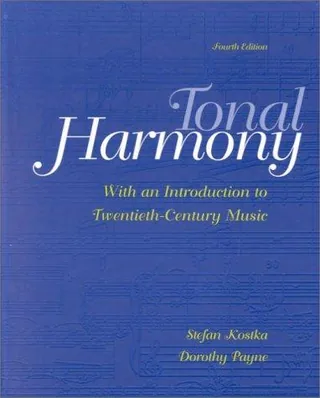
Tonal Harmony
The standard undergraduate text on common-practice harmony, with workbook exercises sold separately. It covers harmony alone, so it ranks below The Complete Musician for a combined course.
Best for Undergraduate study of common-practice harmony
PrintPaid
- 4
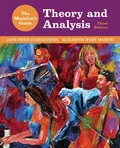
The Musician's Guide to Theory and Analysis
A tonal theory and analysis textbook with video tutorials and online formative exercises tied to each chapter. It is broader than Tonal Harmony, but it ranks below The Complete Musician for a combined course.
Best for Theory and analysis with online exercises
PrintPaid
- 5
Music Theory*
A short, lower-priced digital guide: a 78-page PDF from the musics.name project, sold on Gumroad. It is not a university textbook, covers intervals, keys, harmony and more, and ranks last on depth.
Best for Low-cost digital guide to core theory topics
PDFPaid
- 6
Harmony and Voice Leading
A rigorous, analysis-oriented treatment of tonal harmony and voice leading with many score examples. It is dense for readers new to harmony, which places it below the standard undergraduate texts.
Best for Analytical study of tonal harmony and voice leading
PrintPaid
- 7
The Jazz Theory Book
The most focused guide here to jazz harmony, scales, chord-scale theory and reharmonization. It assumes basic theory and covers only jazz, so it suits players more than general readers.
Best for Jazz harmony, scales and reharmonization
PrintPaid
- 8
Music in Theory and Practice
A broad McGraw-Hill textbook that surveys musical styles from the Renaissance to the present, with composition analysis. It covers less harmony than Tonal Harmony, so it ranks below the harmony texts above it.
Best for Survey of musical styles and composition
PrintPaid
- 9
A Geometry of Music
Its advanced, mathematical approach to voice leading and scales spans classical, jazz and rock. It suits experienced readers, and it ranks below the textbooks because it is less useful for a first course.
Best for Theorists studying voice leading and scales
PrintPaid
- 10
Berklee Music Theory Book 1
Beginner-to-intermediate fundamentals from the Berklee College of Music, with exercises in print. It stops short of a full harmony course, so readers move on to Tonal Harmony afterwards.
Best for Beginners learning music theory fundamentals
PrintPaid
- 11
Music Theory for Dummies
An accessible beginner introduction to music theory in the For Dummies series. Its depth is limited, so it sits just below Berklee Music Theory Book 1.
Best for Absolute beginners reading music theory
PrintPaid
- 12
Music Theory for Computer Musicians
A theory text aimed at people who write music with software and MIDI rather than at classical study. It is narrower than the general textbooks above it, so it ranks lower for most readers.
Best for Composers working with software and MIDI
PrintPaid
At a glance
| Product | Score | Price | Formats | Level | Main focus | Free to read online |
|---|---|---|---|---|---|---|
| Open Music Theory | 91.0 | Free | Read online | Beginner to intermediate | Fundamentals through chromatic harmony | Yes |
| The Complete Musician | 89.0 | Paid | Intermediate | Harmony, analysis, ear training and performance | No | |
 Tonal Harmony | 88.0 | Paid | Intermediate | Common-practice tonal harmony | No | |
 The Musician's Guide to Theory and Analysis | 87.5 | Paid | Intermediate | Tonal theory and analysis with online exercises | No | |
 Music Theory* | 72.0 | Paid | Not stated on the listing | Intervals, keys, harmony, form and orchestration | No | |
 Harmony and Voice Leading | 86.5 | Paid | Advanced | Tonal harmony and voice leading | No | |
 The Jazz Theory Book | 85.0 | Paid | Intermediate | Jazz harmony, scales and chord-scale theory | No | |
 Music in Theory and Practice | 84.5 | Paid | Intermediate | Musical styles from the Renaissance to the present | No | |
| A Geometry of Music | 83.0 | Paid | Advanced | Voice leading and scales across styles | No | |
 Berklee Music Theory Book 1 | 82.0 | Paid | Beginner to intermediate | Music theory fundamentals with exercises | No | |
 Music Theory for Dummies | 81.0 | Paid | Beginner | Introductory music theory basics | No | |
 Music Theory for Computer Musicians | 80.5 | Paid | Beginner to intermediate | Theory for writing music with software and MIDI | No |
How to choose music theory books
- Free start
- Open Music Theory is free to read online and covers fundamentals through chromatic harmony.
- Undergraduate course
- The Complete Musician and Tonal Harmony are standard print texts for undergraduate harmony courses.
- Analysis and voice leading
- Harmony and Voice Leading and A Geometry of Music suit readers who already know harmony and want analysis.
- Jazz and software
- The Jazz Theory Book suits jazz players, and Music Theory for Computer Musicians suits people who compose with software.
- Starting from zero
- Berklee Music Theory Book 1 covers beginner-to-intermediate fundamentals with exercises in print.
What the scores weigh
- Teaching clarity
- Depth of harmony and voice leading
- Coverage of core theory
- Free access and price
- Fit with a stated audience
Scores are editorial, from 0 to 100, and use these criteria. Full method · Disclosure
About music theory books
The list covers three kinds of book. Open Music Theory is the one free online textbook, and it covers fundamentals through chromatic harmony. The Complete Musician and Tonal Harmony are undergraduate textbooks on common-practice harmony, and Harmony and Voice Leading is a more analytical text in the same area. The Musician's Guide to Theory and Analysis and Music in Theory and Practice are also textbooks for students, and Music Theory for Dummies is a beginner introduction.
Specialist books take narrower paths. The Jazz Theory Book covers jazz harmony and scales, A Geometry of Music treats voice leading across classical, jazz and rock, Berklee Music Theory Book 1 offers beginner fundamentals, and Music Theory for Computer Musicians addresses writing with software and MIDI. The Music Theory* PDF from the musics.name* project is a shorter, lower-priced digital guide, and it is not a university textbook.
Only Open Music Theory is free to read in full. The scores below are editorial judgments against the criteria, not measurements.
Frequently asked questions
- What is the best free music theory book?
- Open Music Theory is the only free book on this list, an openly licensed online textbook from fundamentals through chromatic harmony. It is the strongest free option, but a print textbook may suit a structured classroom course better.
- Which music theory book should a beginner read first?
- Berklee Music Theory Book 1 covers beginner-to-intermediate fundamentals with exercises. Open Music Theory is free online and is a good first read if you prefer reading on a screen.
- Which book is best for jazz harmony?
- The Jazz Theory Book covers jazz scales, chord-scale theory and reharmonization, but it assumes basic theory. Readers who want the same ideas across styles should compare A Geometry of Music, which is more advanced.
- Is the musics.name Music Theory PDF a substitute for a textbook?
- No. It is a shorter, lower-priced 78-page PDF from the musics.name* project, while the textbooks on this list are larger works. Much of its material overlaps with the free musics.name site, according to its listing.
Related rankings
- Best AI and machine learning books13 products ranked
- Best career and future-of-work books12 products ranked
- Best computer architecture books11 products ranked
- Best industrial automation and manufacturing books9 products ranked
- Best personal finance and investing books12 products ranked
- Best productivity and note-taking books10 products ranked
- Best programming books11 products ranked
- Best reinforcement learning and edge ML books10 products ranked












Tools for choosing music theory books
All tools- FinderAlternatives finderType the name of a product you already use, and the finder lists the other products from the same rankings in ranked order. Free-only and open-source-only filters narrow the list, and links lead to the product's full alternatives page and to comparison pages.
- FinderSoftware finderThe software finder searches the products in the rankings on this site. Choose a kind, category, platform and price rule, and each result shows its best rank. The results are server-rendered, so the form works without JavaScript.


Made by, or connected to, the publisher of this site or people the publisher works with. Listed on the same criteria as everything else, with the lift described in How we rank and Disclosure.