Guides
Books that explain how factories work: lean, PLCs and OT security
Choose a first book on manufacturing by goal: constraints and lean, PLC programming, control network security or Industry 4.0, and what each one leaves out.
Pick a first book on manufacturing by the job in front of you. The Goal explains why a plant's bottleneck sets its output, Lean Thinking and Learning to See cover lean principles and one practical method, Petruzella's Programmable Logic Controllers teaches ladder logic from the start, and Industrial Network Security covers the networks that connect control systems. The industrial automation and manufacturing books ranking weighs clarity and practical use first, then depth and currency.
This guide uses the publishers' own pages, checked November 1, 2026, and describes what each book covers and who it suits. It is written for readers new to plants: IT staff moving into operations, engineering students and new production managers.
Start with flow and constraints: The Goal
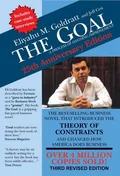
The Goal by Eliyahu M. Goldratt is a business novel set in a factory. Its story presents the theory of constraints: a plant's output is set by its bottleneck, and improvement is a continuing search for whatever limits output. The publisher, North River Press, says the book is used in business and university courses, and the 20th Anniversary Edition adds case study interviews by David Whitford.
Because the method comes through a story, The Goal explains the thinking rather than the calculations or tools a plant team uses. That makes it the easiest first read for a new manager, or for IT staff who need to understand why production planners talk about bottlenecks. It is a weak choice for someone who needs a method to apply on the floor next week.
Lean principles and one practical method
Lean Thinking by James Womack and Dan Jones draws its lessons from case studies across many industries, distills the principles of lean thinking and shows how they apply in different settings. It treats lean as a way to organize work rather than a list of tools. It explains principles rather than step-by-step tool use, so it is a foundation for managers who are starting a lean program.
Learning to See by Mike Rother and John Shook is the practical companion. It is a workbook that teaches value-stream mapping, a method for drawing the flow of material and information through a process. The reader maps the current state of a real process and then draws a future state that removes waste. It covers one tool only and needs a real process to practice on, which is also why it works: the method is learned by doing it.
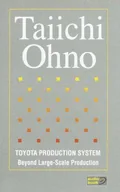
Toyota Production System: Beyond Large-Scale Production by Taiichi Ohno is the primary source. Ohno ran Toyota's machine shop and later became an executive vice president, and the book traces how the system developed and the reasons behind just-in-time production. It gives reasons rather than procedures, and its English edition dates from 1988, so it suits readers who want the origins of lean before its tools.
Programming PLCs: two textbooks for two stages
Programmable Logic Controllers by Frank D. Petruzella is the starting point for PLC work. The 2025 release from McGraw Hill builds from number systems and logic to ladder programs, then covers timers, counters, program control, data manipulation, troubleshooting, process control with SCADA and networks, and ControlLogix controllers. Each chapter sets out its objectives and ends with review problems. Its table of contents centers on ladder logic, with no chapter on structured text or function block diagram.
Kelvin T. Erickson's Programmable Logic Controllers, 4th Edition, treats PLC programming as a design task: turning operating specifications into a working program. It covers ladder logic and the other four IEC 61131-3 languages on five PLC families from Rockwell, Siemens, Modicon and Emerson/GE, with 75 example problems, two full-length case studies and more than 250 homework problems. At 1,520 pages and $110 hardbound, it suits a course or a reference shelf more than a first read.
A reader who has never written a PLC program should start with Petruzella, then move to Erickson when design method and the other IEC languages start to matter.
Securing control networks
Industrial Network Security by Eric D. Knapp, published by Elsevier, is the security reference in this group. The third edition, dated March 2024, explains how industrial networks and their protocols are built, describes attacks on control systems such as Trisis and Industroyer, and covers risk assessment, security zones and conduits, network segmentation, monitoring and the ISA/IEC 62443 standards. This edition adds OT attack methodology, USB security and incident response.
It is written as a reference rather than a course, and its protocol and attack detail is dense for readers outside security. An IT security professional moving into OT will find it the most direct route. A plant engineer may get more from it after a first book on how the plant itself runs.
Connected-factory architecture
Industry 4.0: The Industrial Internet of Things by Alasdair Gilchrist covers IIoT use cases, reference architecture, access networks, middleware, platforms, WAN protocols and security, and ends with an introduction to Industry 4.0. It is sold as a softcover and as EPUB and PDF. It was published in 2016, so it predates much of the current industrial AI and edge tooling, and readers will need newer documentation for recent platforms. It suits architects who want to see how devices, networks and software layers fit together, and it can feel abstract to plant staff.
Our picks
- PLC programming from the start: Programmable Logic Controllers by Frank D. Petruzella.
- A first read on bottlenecks and flow: The Goal.
- Lean principles for managers: Lean Thinking.
- One lean method a team can practice: Learning to See.
- Securing control networks: Industrial Network Security.
The ranking also includes Understanding the Shop Floor* (70.0), a 76-page PDF overview of a whole plant, from PLCs and SCADA to MES, ERP and OEE, with vocabulary boxes and 31 references.
Compare head to head
 Programmable Logic Controllersversus
 The Goal
 Lean ThinkingversusProgrammable Logic Controllers
- Lean ThinkingversusThe Goal
Mentioned in this article
- The GoalBusiness novel about factory bottlenecks and making money
- Lean ThinkingCase studies that set out the principles of lean thinking
 Learning to SeeWorkbook that teaches value-stream mapping one step at a time
 Toyota Production System: Beyond Large-Scale ProductionTaiichi Ohno's account of how the Toyota Production System began
- Programmable Logic ControllersTextbook that teaches PLC hardware, ladder logic and programming
 Programmable Logic Controllers, 4th EditionDesign-focused PLC textbook with examples and homework problems
 Industrial Network SecurityReference on securing control networks, SCADA and industrial systems
 Industry 4.0: The Industrial Internet of ThingsArchitecture and middleware guide to the Industrial Internet of Things
- Understanding the Shop Floor (made by the publisher of this site)A short guide to how factories work, from PLCs and SCADA to MES and OEE
Keep reading
All articles- Guides · 5 min readHow to learn music theory with websites and booksChoose music theory sites and books by teaching order, practice and cost. Compare musictheory.net, teoria.com, Open Music Theory and The Complete Musician.
- Roundups · 6 min readBest books for learning machine learning, from math to practiceFollow a machine learning reading path from math and statistics to code, research and edge devices. See which books are free to read online and which are paid.
- Roundups · 5 min readBest books for learning to program, by goalPick a programming book by goal: a first language, one language in depth, how interpreters work or software craft. Compare free online books with paid titles.