Roundups
Best books for learning machine learning, from math to practice
Follow a machine learning reading path from math and statistics to code, research and edge devices. See which books are free to read online and which are paid.
A machine learning reading list works best as a path. Start with the mathematics or statistics the models rely on, move to code that builds models, then read research texts that cover theory and newer methods. The machine learning books ranking covers the general field, and the reinforcement learning and edge ML ranking covers agents and small devices. Start from the math you can handle now, then pick the next book on the path.
Start with statistics and Python
An Introduction to Statistical Learning, Python edition, by Gareth James, Daniela Witten, Trevor Hastie, Robert Tibshirani and Jonathan Taylor, is the most approachable text in its ranking. It covers regression, classification, resampling and tree-based methods, with a Python lab in each chapter. The labs assume some Python skill. A free PDF is available.
Build the math you need
Mathematics for Machine Learning by Marc Peter Deisenroth, A. Aldo Faisal and Cheng Soon Ong was published by Cambridge University Press in 2020. It covers linear algebra, analytic geometry, matrix decompositions, vector calculus, probability and optimization, and connects them to regression, PCA and support vector machines. The authors keep a free PDF online. It has few worked code examples and assumes university-level mathematics, so pair it with a practical text.
The ranking notes that several of the theory-first books assume calculus and linear algebra, so check your footing before you start them.
Learn the foundations of deep learning
Deep Learning by Ian Goodfellow, Yoshua Bengio and Aaron Courville was published by MIT Press in 2016, and its full text is free to read online. It covers applied mathematics, machine learning basics, and feedforward, convolutional and recurrent networks. It predates transformers and large language models and has little code, so the ranking pairs it with a current practical guide.
Probabilistic Machine Learning by Kevin P. Murphy, a 2022 MIT Press textbook, builds machine learning on probability and Bayesian reasoning. A free draft PDF is published under a non-commercial, no-derivatives license, and its figures come with code in Colab notebooks. Its entry notes that it is long and mathematical for self-study.
Practice: build models in code
Dive into Deep Learning by Aston Zhang, Zack C. Lipton, Mu Li and Alex J. Smola is an interactive online book. Each section is an executable Jupyter notebook, with versions in PyTorch, JAX, TensorFlow and MXNet, and the full text is free on the web. It covers less theory than the Goodfellow text, and no finished print edition is listed.
Deep Learning with Python, third edition, by François Chollet and Matthew Watson, was published by Manning in September 2025. It teaches deep learning and generative AI with Keras 3. Manning sells print, PDF and ePub editions, and the book has no free full text. It is light on the mathematics behind the models.
The ranking also includes Hands-On Machine Learning (87.0), a paid book that teaches methods through code with scikit-learn, Keras and TensorFlow, sold in print with no free full text online.
Research and theory
Speech and Language Processing by Dan Jurafsky and James H. Martin is still a third-edition draft. The authors post updated chapters and a single PDF on the Stanford site, and the content can change. It covers text processing, language models, transformers and speech.
Pattern Recognition and Machine Learning by Christopher M. Bishop, a 2006 Springer textbook, explains probability, graphical models and kernel methods from a Bayesian viewpoint. It predates modern deep learning, and its publisher page lists a softcover but no free full text.
For reading research papers alongside books, see best AI tools for research and reading papers.
Reinforcement learning
Reinforcement Learning: An Introduction, second edition, by Richard S. Sutton and Andrew G. Barto was published by MIT Press in 2018. The authors post the full PDF for free, and the ranking calls it the standard free text for the subject. It covers value functions, temporal-difference learning and policy gradients, with a strong focus on theory.
Reinforcement Learning and Optimal Control by Dimitri P. Bertsekas offers a free PDF for instructional use, and its author's page describes a 2025 second edition. It treats the subject through dynamic programming and is written at graduate level.
Reinforcement Learning: Theory and Algorithms by Alekh Agarwal and co-authors is a free PDF that its authors update frequently. It is still in progress and has little code.
Algorithms for Reinforcement Learning by Csaba Szepesvari is a short free PDF from 2010. It surveys the classic algorithms and predates deep reinforcement learning.
The ranking also includes Bandit Algorithms (88.0), a theory-first text on bandit problems and exploration with little practical code. The authors offer a free PDF, and printed copies are sold separately.
Edge machine learning
TinyML by Pete Warden and Daniel Situnayake is the most practical guide in the ranking for running models on microcontrollers. Its free preview is partial, and the full PDF and print copy are sold separately. It has little mathematical theory.
Efficient Processing of Deep Neural Networks by Vivienne Sze, Yu-Hsin Chen, Tien-Ju Yang and Joel S. Emer, published by Springer in 2020, covers trade-offs between hardware design and algorithm choices. It is paid, has no free full text, and does not cover reinforcement learning.
Fringe Learning* is an 86-page PDF from The Knowledge Project on reinforcement learning for microcontrollers and NPUs. It is pay-what-you-want on Gumroad, and it suits readers who already know the basics of reinforcement learning.
The ranking also includes How to Remain Valuable When Intelligence Becomes Cheap*, a career strategy book rather than a machine learning text. It scores lowest for the topic.
A path through the list
- If your math is weak, start with the statistical learning text, then the mathematics book.
- For foundations, read the Goodfellow text, which is free online, next to a practical book.
- For code, start with Dive into Deep Learning, which is free, or the Chollet book, which is paid.
- For probability and Bayesian methods, read the Murphy draft once the foundations are in place.
- For reinforcement learning, start with Sutton and Barto, then move to Bertsekas or the Agarwal draft.
- For edge deployment, start with TinyML. Add Fringe Learning if your work is reinforcement learning on small hardware.
Free and paid at a glance
Free to read online, according to the listings: Deep Learning, Dive into Deep Learning, the Murphy draft, Mathematics for Machine Learning (PDF), An Introduction to Statistical Learning (PDF), Speech and Language Processing (draft PDF), Sutton and Barto (PDF), Bertsekas (PDF for instructional use), the Agarwal draft and the Szepesvari PDF. Paid with no free full text: Deep Learning with Python, Bishop's book and the Sze book. TinyML offers only a free preview.
| Book | Author | Level | Best for |
|---|---|---|---|
| An Introduction to Statistical Learning | Gareth James, Daniela Witten, Trevor Hastie, Robert Tibshirani, Jonathan Taylor | Beginner | Statistical learning for beginners with Python |
| Mathematics for Machine Learning | Marc Peter Deisenroth, A. Aldo Faisal, Cheng Soon Ong | Advanced | Math behind classic machine learning methods |
| Deep Learning | Ian Goodfellow, Yoshua Bengio, Aaron Courville | Advanced | Foundations of deep learning, free online |
| Probabilistic Machine Learning | Kevin P. Murphy | Advanced | Probabilistic modeling and Bayesian methods |
| Dive into Deep Learning | Aston Zhang, Zack C. Lipton, Mu Li, Alex J. Smola | Intermediate | Hands-on deep learning with free notebooks |
| Deep Learning with Python | François Chollet, Matthew Watson | Intermediate | Practical deep learning code in Python |
| Reinforcement Learning: An Introduction | Richard S. Sutton, Andrew G. Barto | Intermediate | Standard free reinforcement learning textbook |
| TinyML | Pete Warden, Daniel Situnayake | Intermediate | Running machine learning on microcontrollers |
The free-online status above follows each book's listing. Check the license and edition before you rely on a free copy.
Compare head to head
 Deep Learningversus
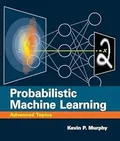 Probabilistic Machine Learning: An Introduction
- Deep Learningversus
 Dive into Deep Learning
- Dive into Deep LearningversusProbabilistic Machine Learning: An Introduction
Mentioned in this article
- An Introduction to Statistical Learning (Python edition)Accessible statistical learning textbook with Python labs and a free PDF
 Mathematics for Machine LearningMath foundations for machine learning with a free PDF from the authors
- Deep LearningGraduate-level textbook on deep learning from MIT Press, free online
- Dive into Deep LearningInteractive free online deep learning book with runnable code
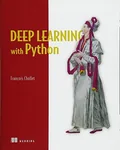 Deep Learning with Python, Third EditionHands-on Python deep learning guide covering Keras 3, PyTorch and JAX
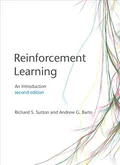 Reinforcement Learning: An IntroductionStandard reinforcement learning textbook by Sutton and Barto with a free PDF
 TinyMLPractical guide to running machine learning on microcontrollers
- Probabilistic Machine Learning: An IntroductionProbability-based machine learning textbook with a free draft PDF
Related lessons
Learning Center 1:18How to read rankings and reviews without being misledLearn what a software ranking can show, which parts to read first, how to spot disclosure and dates, and how to read user reviews with care.
 1:20How to compare products fairly: what to keep in mindDefine the job, cap the must-haves, compare like with like, count total cost over one period and weigh the criteria. Includes a worked example.
Keep reading
All articles- Roundups · 5 min readBest books on reinforcement learning and edge MLChoose a reinforcement learning or edge ML book by level, free access and hardware focus. Compare Sutton and Barto, Bertsekas, TinyML and Fringe Learning.
- Roundups · 5 min readBest books for learning to program, by goalPick a programming book by goal: a first language, one language in depth, how interpreters work or software craft. Compare free online books with paid titles.
- Roundups · 4 min readBest personal finance books compared by approachCompare personal finance books by approach: behavior, index investing, value investing and spending. See what each argues and which book fits your goal.