Roundups
Best books on reinforcement learning and edge ML
Choose a reinforcement learning or edge ML book by level, free access and hardware focus. Compare Sutton and Barto, Bertsekas, TinyML and Fringe Learning.
Reinforcement learning books teach agents that learn from rewards, and edge machine learning books teach how to run models on small devices. The reinforcement learning and edge ML books ranking covers both groups, so start by deciding which side your work is on. Free access is strong on the reinforcement learning side, where several texts are free PDFs.
Start with the standard textbook
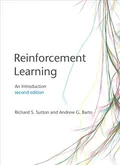
Reinforcement Learning: An Introduction by Richard S. Sutton and Andrew G. Barto is the most direct route into the field. The second edition was published by MIT Press in 2018, and the authors post the full PDF for free, with printed copies sold separately. The book builds from the reward signal, value functions and the Bellman equation to temporal-difference learning, planning and policy gradients. Each chapter includes exercises, and the site hosts errata, code and teaching slides. The text assumes basic probability and programming, and its trade-offs are its length and a focus on core ideas over recent large-scale systems.
Reinforcement Learning and Optimal Control by Dimitri P. Bertsekas treats reinforcement learning as approximate dynamic programming. The author's page describes a 2025 second edition and offers a free PDF for instructional use, so check the page's terms before you share it. The book suits graduate students with a background in optimization and probability, and the author's site also hosts video lectures and slides.
Theory depth and mathematics
Theory texts differ in how much mathematics they assume. Bandit Algorithms by Tor Lattimore and Csaba Szepesvári covers bandit problems, in which an agent chooses among actions with uncertain rewards. Its PDF is free from the authors' site, but the book is theory-first and includes little practical code. Reinforcement Learning: Theory and Algorithms by Alekh Agarwal, Kianté Brantley, Nan Jiang, Sham M. Kakade and Wen Sun is a free PDF that is updated frequently, and it states its results as theorems and proofs. The site says the authors planned frequent updates in spring 2026 and links an earlier version 3 PDF from 2022, so expect a text that is still in progress.
Currency and deep reinforcement learning
Currency matters because the field has moved on since some of these texts were written. Algorithms for Reinforcement Learning by Csaba Szepesvari is a short survey from 2010, published by Morgan and Claypool, with a free PDF on the author's page. It presents the core algorithms of its time, but it predates deep reinforcement learning and does not cover deep Q-networks or modern policy optimization methods. For deep reinforcement learning with code, Foundations of Deep Reinforcement Learning by Laura Graesser and Wah Loon Keng pairs theory with Python, in editions from 2019 to 2021 published by Pearson. It assumes some reinforcement learning background. Grokking Deep Reinforcement Learning by Miguel Morales, from Manning in 2020, teaches through worked examples and exercises. It has no free full text, though the publisher offers an excerpt.
Edge machine learning on small hardware
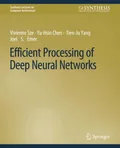
Edge books cover a different job from the agent texts. TinyML by Pete Warden and Daniel Situnayake explains how to shrink trained models so they fit on microcontrollers and deploy them to small devices. Its official site offers a free preview PDF, while the full book is sold as a PDF, and a print copy is available from Amazon. The book has little mathematical theory. Efficient Processing of Deep Neural Networks by Vivienne Sze, Yu-Hsin Chen, Tien-Ju Yang and Joel S. Emer is a 2020 Springer book in 11 chapters on hardware and algorithm trade-offs for running deep neural networks efficiently. It is paid, has no free full text and covers no reinforcement learning. Fringe Learning* is an 86-page PDF on reinforcement learning for microcontrollers, NPUs and other constrained hardware. It covers reward design, quantization-aware training, policy distillation and edge deployment. The listing is pay what you want on Gumroad with a suggested price of $5, and it has no ratings yet. The guide is narrower than the textbooks, so it suits readers who already know the basics of reinforcement learning.
Free access, formats and price
Several reinforcement learning texts are free to read or download: the Sutton and Barto PDF, the Bertsekas PDF for instructional use, Bandit Algorithms, Algorithms for Reinforcement Learning and the Agarwal theory draft. The free filter on the ranking lists them. The edge books are paid. TinyML sells its full text, Grokking is a print book from Manning, and Efficient Processing has a paid eBook and softcover from Springer. The Fringe Learning guide is listed only as a PDF, with no EPUB or print edition. Check the terms of the free copies before you rely on them, since the Bertsekas copy is offered for instructional use and the Agarwal draft is still changing.
Our picks from the ranking
The ranking places the products covered here in this order:
- Reinforcement Learning: An Introduction (94.0): standard free reinforcement learning textbook.
- Reinforcement Learning and Optimal Control (90.5): graduate study of RL and dynamic programming.
- TinyML (89.0): running machine learning on microcontrollers.
- Bandit Algorithms (88.0): theory of exploration and bandit problems.
- Fringe Learning: Resource-Efficient RL for Edge ML* (79.5): reinforcement learning on edge hardware.
- Efficient Processing of Deep Neural Networks (87.5): hardware for efficient deep neural networks.
- Reinforcement Learning: Theory and Algorithms (86.0): theory-first study of reinforcement learning.
- Foundations of Deep Reinforcement Learning (85.0): theory and Python for deep RL.
- Algorithms for Reinforcement Learning (84.5): short overview of classic RL algorithms.
- Grokking Deep Reinforcement Learning (83.0): building deep reinforcement learning agents.
What to do next
Decide whether you are training agents or running models on a device, since the two groups answer different questions. For agents, start with the Sutton and Barto PDF and move to the Bertsekas book only if you can handle graduate mathematics. For devices, read the free preview of TinyML before you buy, since the preview is partial and shows part of the approach. If you already know reinforcement learning and work on microcontrollers or NPUs, look at Fringe Learning, but check that its scope fits, because it is about edge hardware rather than general reinforcement learning.
Compare head to head
 Reinforcement Learning: An IntroductionversusReinforcement Learning and Optimal Control
- Reinforcement Learning: An Introductionversus
 TinyML
 - Reinforcement Learning and Optimal ControlversusTinyML
 Fringe Learning: Resource-Efficient RL for Edge ML (made by the publisher of this site)versusReinforcement Learning: An Introduction
Mentioned in this article
- Reinforcement Learning: An IntroductionStandard reinforcement learning textbook by Sutton and Barto with a free PDF
- Reinforcement Learning and Optimal ControlBertsekas on reinforcement learning as dynamic programming, free PDF
- TinyMLPractical guide to running machine learning on microcontrollers
 Bandit AlgorithmsFree PDF of a theory text on bandit problems and exploration
 Efficient Processing of Deep Neural NetworksHardware-focused book on running deep neural networks efficiently
- Fringe Learning: Resource-Efficient RL for Edge ML (made by the publisher of this site)Guide to reinforcement learning on microcontrollers and NPUs
Related lessons
Learning Center 1:18How to read rankings and reviews without being misledLearn what a software ranking can show, which parts to read first, how to spot disclosure and dates, and how to read user reviews with care.
 1:20How to compare products fairly: what to keep in mindDefine the job, cap the must-haves, compare like with like, count total cost over one period and weigh the criteria. Includes a worked example.
Keep reading
All articles- Roundups · 6 min readBest books for learning machine learning, from math to practiceFollow a machine learning reading path from math and statistics to code, research and edge devices. See which books are free to read online and which are paid.
- Roundups · 5 min readBest books for learning to program, by goalPick a programming book by goal: a first language, one language in depth, how interpreters work or software craft. Compare free online books with paid titles.
- Roundups · 4 min readBest personal finance books compared by approachCompare personal finance books by approach: behavior, index investing, value investing and spending. See what each argues and which book fits your goal.