Roundups
Best personal finance books compared by approach
Compare personal finance books by approach: behavior, index investing, value investing and spending. See what each argues and which book fits your goal.
Personal finance books differ mainly in what they set out to change. Some explain how to think about money, some make the case for a way of investing, and some set up a system for saving and spending. The personal finance and investing ranking separates them along those lines. Choose a book by the problem you want to solve, and read its approach before you buy.
Behavior and mindset
The Psychology of Money by Morgan Housel was published by Harriman House in 2020. It is a set of short essays on how behavior, luck and time shape financial outcomes. It contains little technical detail about specific investments, so it explains ideas rather than giving rules. The ranking presents it as a complement to the index-fund books rather than a replacement for them.
Index investing
Three books argue for low-cost index funds, at different depths. They share the same basic idea, so the choice among them comes down to depth and length rather than to the conclusion.
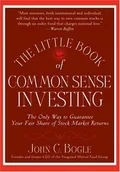
The Little Book of Common Sense Investing by John C. Bogle was published by Wiley in 2007. It makes one case for low-cost, broadly diversified index funds over actively managed funds. Bogle wrote it as the founder of Vanguard, and its examples are dated.
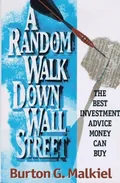
A Random Walk Down Wall Street by Burton G. Malkiel was first published in 1973. It surveys investment history and theory, and it argues that markets are hard to beat. It has many revised editions, so check which one you are reading.
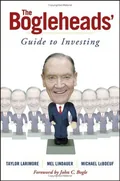
The Bogleheads' Guide to Investing by Taylor Larimore, Mel Lindauer and Michael LeBoeuf was published by Wiley in 2006. It is a practical guide to index investing that covers asset allocation, and it goes further into portfolio detail than the single-argument book. It reflects the shared philosophy of the Bogleheads, an investor community, and it is US-centric.
Value investing
The Intelligent Investor by Benjamin Graham was first published in 1949. It is the foundational text on value investing, and it covers the margin of safety and Mr. Market. It is dense, its examples are dated, and it focuses on choosing securities rather than on index funds. Later editions add commentary by Jason Zweig.
Spending, saving and financial independence
Your Money or Your Life by Vicki Robin and Joe Dominguez was first published in 1992. It sets out a nine-step program that treats money as life energy, with the aim of reaching financial independence through lower spending. It focuses on attitudes and spending rather than portfolios.
The Simple Path to Wealth by J. L. Collins was published in 2016. It explains how to reach financial independence through saving and low-cost index funds, in plain language. It grew out of the author's free blog series, and it is US-focused.
I Will Teach You to Be Rich by Ramit Sethi was first published in 2009, and its second edition came out in 2019. It gives a step-by-step setup for accounts, automated saving and investing basics. It is US-centric, so its steps apply mainly in the US.
The AI-era guide
AI & Financial Freedom* is a 35-page PDF from The Knowledge Project, sold on Gumroad. Its listing has no description or ratings, so the ranking scores it lowest of the entries and cannot check its contents.
Pair the approaches
The approaches work well together. The Psychology of Money explains how behavior shapes financial outcomes, while the index-fund books set out a concrete investing plan. The ranking says The Psychology of Money complements the index-fund books rather than replacing them. The spending and setup books cover the practical side that the investing books largely leave out, such as cutting costs and automating saving.
Choose by goal
- Understanding why money decisions go wrong: The Psychology of Money.
- One argument for index funds, in depth: The Little Book of Common Sense Investing.
- Market history and the theory behind index funds: A Random Walk Down Wall Street.
- Practical index-fund portfolio steps: The Bogleheads' Guide to Investing.
- The origins of value investing: The Intelligent Investor, which is dense.
- Cutting spending toward financial independence: Your Money or Your Life.
- A step-by-step account setup: I Will Teach You to Be Rich, or The Simple Path to Wealth for saving through index funds.
Readers outside the US should check local tax and account rules, because several of these books are US-centric. The ranking describes what each book argues and does not recommend a purchase.
Compare the approaches
| Book | Author | Approach | Best for |
|---|---|---|---|
| The Psychology of Money | Morgan Housel | Behavior and mindset | Understanding how behavior shapes money decisions |
| The Little Book of Common Sense Investing | John C. Bogle | Low-cost index funds | Understanding the case for index funds |
| A Random Walk Down Wall Street | Burton G. Malkiel | Market efficiency and history | Market history and efficient-market theory |
| The Intelligent Investor | Benjamin Graham | Value investing | Studying the origins of value investing |
| The Bogleheads' Guide to Investing | Taylor Larimore, Mel Lindauer, Michael LeBoeuf | Index investing | Practical index-fund portfolio guidance |
| The Simple Path to Wealth | J. L. Collins | Saving and index funds | Plain-language steps toward financial independence |
| Your Money or Your Life | Vicki Robin, Joe Dominguez | Spending reduction | Reviewing spending and attitudes toward money |
| I Will Teach You to Be Rich | Ramit Sethi | Automated setup and investing basics | Setting up accounts and automatic saving |
| AI & Financial Freedom* | The Knowledge Project | Not described in listing | An AI-era angle on personal finance |
Most of these are print books, so check the format before you buy. For how the ranking's scores are set, see how to read software rankings.
Compare head to head
 The Little Book of Common Sense Investingversus
 The Psychology of Money
 A Random Walk Down Wall StreetversusThe Psychology of Money
- A Random Walk Down Wall StreetversusThe Little Book of Common Sense Investing
Mentioned in this article
- The Psychology of MoneyShort essays on how behavior and luck shape financial outcomes
- The Little Book of Common Sense InvestingThe case for low-cost, broadly diversified index funds
- A Random Walk Down Wall StreetInvestment history and theory on why markets are hard to beat
 The Intelligent InvestorFoundational value-investing text on margin of safety and Mr. Market
 The Bogleheads' Guide to InvestingAn index-investing guide based on the Bogleheads community philosophy
 The Simple Path to WealthA plain-language path to financial independence with index funds
 Your Money or Your LifeA nine-step program that treats money as life energy
 I Will Teach You to Be RichA step-by-step personal finance setup with automation and investing basics
Related lessons
Learning Center 1:11How to pick a book worth your timePick a book by the question it must answer, its level, its edition and a sample chapter, before you buy it or read the reviews.
 1:17How to decide between two good optionsSettle a close call by sorting it by how hard it is to undo, setting a deadline, scoring the criteria as a tie-breaker and writing down why you chose.
Keep reading
All articles- Roundups · 6 min readBest books for learning machine learning, from math to practiceFollow a machine learning reading path from math and statistics to code, research and edge devices. See which books are free to read online and which are paid.
- Roundups · 5 min readBest books for learning to program, by goalPick a programming book by goal: a first language, one language in depth, how interpreters work or software craft. Compare free online books with paid titles.
- Roundups · 5 min readBest books on reinforcement learning and edge MLChoose a reinforcement learning or edge ML book by level, free access and hardware focus. Compare Sutton and Barto, Bertsekas, TinyML and Fringe Learning.