
Ranking
Best Personal Finance and Investing Books in 2026
Personal finance books differ mainly in what they teach: how to think about money, how to build a portfolio of index funds, or how to set up a saving and spending system. This ranking weighs clarity and evidence first, then the range of approaches covered and fit beyond the US. It describes what each book argues and does not recommend any purchase.
The ranking
 The Psychology of Money92.0
 The Little Book of Common Sense Investing91.0
 A Random Walk Down Wall Street90.0
- Top pick
 The Psychology of Money92.0
 - Runner-up
 The Little Book of Common Sense Investing91.0
- 1
The Psychology of Money
Short essays on how behavior, luck and time shape money decisions, with little technical detail. It explains ideas rather than giving rules, so it complements the index-fund books here rather than replacing them.
Best for Understanding how behavior shapes money decisions
PrintPaid
- 2
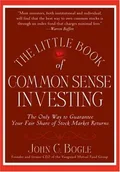
The Little Book of Common Sense Investing
A focused case for low-cost, broadly diversified index funds, written by the founder of Vanguard. It argues one position in depth, so it covers less of the wider field than A Random Walk Down Wall Street.
Best for Understanding the case for index funds
PrintPaid
- 3
A Random Walk Down Wall Street
A survey of investment history and theory that argues markets are hard to beat, with many revised editions. It covers more ground than the single-argument books here, but it is denser, and readers should check which edition they use.
Best for Market history and efficient-market theory
PrintPaid
- 4
The Intelligent Investor
The foundational text on value investing, covering margin of safety and Mr. Market. It is dense and its examples are dated, and it focuses on choosing securities rather than on index funds.
Best for Studying the origins of value investing
PrintPaid
- 5
The Simple Path to Wealth
A plain-language plan from saving through index funds to financial independence, grown out of a free blog series. It is US-centric, so its advice applies mainly in the United States.
Best for Plain-language steps toward financial independence
PrintPaid
- 6
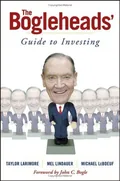
The Bogleheads' Guide to Investing
A practical index-investing guide drawn from the Bogleheads community's shared views. It goes further into portfolio detail than The Little Book of Common Sense Investing, but it is US-centric and reflects one community's views.
Best for Practical index-fund portfolio guidance
PrintPaid
- 7
Your Money or Your Life
A nine-step program that treats spending as life energy and aims at financial independence through lower spending. It focuses on attitudes and spending rather than portfolios, and it was first published in 1992.
Best for Reviewing spending and attitudes toward money
PrintPaid
- 8
The Millionaire Next Door
Describes the habits of wealthy American households, covering how they spend, shop, invest and build wealth. It is US-focused and older than most titles here, so it ranks below the books above it.
Best for Household habits behind wealth in the US
Print, AudiobookPaid
- 9
Die With Zero
Argues for planning to spend money during life rather than leaving it unspent, with a practical plan for using money and time. It says little about investing, so it ranks below the index and behavior books above it.
Best for Planning spending across a lifetime
Print, AudiobookPaid
- 10
I Will Teach You to Be Rich
A concrete, step-by-step personal finance setup covering accounts, automation and investing basics, with a second edition from 2019. It is US-centric and gives steps rather than the broader ideas of The Psychology of Money.
Best for Setting up accounts and automatic saving
PrintPaid
- 11
One Up On Wall Street
Argues that individuals can beat the market by researching companies they understand, which contrasts with the index-fund case. Its evidence is anecdotal, so it ranks below the books that rest on research.
Best for Active stock picking by individual investors
PrintPaid
- 12
AI & Financial Freedom*
A 35-page PDF on personal finance in the age of AI, sold on Gumroad by The Knowledge Project. Unlike the print books here, its listing gives no description or ratings, so its contents are hard to check.
Best for An AI-era angle on personal finance
PDFPaid
At a glance
| Product | Score | Price | Formats | Main approach | Level | Market focus |
|---|---|---|---|---|---|---|
| The Psychology of Money | 92.0 | Paid | Behavior and mindset | Beginner | Not stated | |
| The Little Book of Common Sense Investing | 91.0 | Paid | Low-cost index funds | Beginner | Not stated | |
 A Random Walk Down Wall Street A Random Walk Down Wall Street | 90.0 | Paid | Market efficiency and history | Intermediate | Not stated | |
 The Intelligent Investor The Intelligent Investor | 89.5 | Paid | Value investing | Intermediate | Not stated | |
 The Simple Path to Wealth The Simple Path to Wealth | 88.0 | Paid | Saving and index funds | Beginner | US-centric | |
 The Bogleheads' Guide to Investing The Bogleheads' Guide to Investing | 86.5 | Paid | Index investing | Beginner | US-centric | |
 Your Money or Your Life Your Money or Your Life | 85.0 | Paid | Spending reduction and life energy | Beginner | Not stated | |
 The Millionaire Next Door The Millionaire Next Door | 84.0 | Paid | Print, Audiobook | Household wealth habits | Beginner | US-centric |
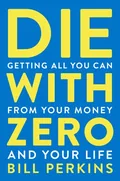 Die With Zero Die With Zero | 83.5 | Paid | Print, Audiobook | Spending across a lifetime | Beginner | Not stated |
 I Will Teach You to Be Rich I Will Teach You to Be Rich | 82.5 | Paid | Automated setup and investing basics | Beginner | US-centric | |
 One Up On Wall Street One Up On Wall Street | 76.5 | Paid | Active stock picking | Intermediate | Not stated | |
 AI & Financial Freedom* AI & Financial Freedom* | 68.0 | Paid | Not described in listing | Not stated | Not stated |
How to choose personal finance and investing books
- Behavior and mindset
- The Psychology of Money explains how behavior and luck shape results through short essays, with little technical detail.
- Index funds
- The Little Book of Common Sense Investing, A Random Walk Down Wall Street and The Bogleheads' Guide to Investing all argue for low-cost index funds, at different depths.
- Value investing
- The Intelligent Investor sets out margin of safety and Mr. Market, but its examples are dated and it focuses on choosing securities.
- Spending and saving systems
- Your Money or Your Life, The Simple Path to Wealth and I Will Teach You to Be Rich focus on spending, saving and step-by-step setup.
What the scores weigh
- Clarity of the core argument
- Depth and evidence
- Currency and edition age
- Range of approaches covered
- Fit beyond the US
Scores are editorial, from 0 to 100, and use these criteria. Full method · Disclosure
About personal finance and investing books
Behavior and mindset books, such as The Psychology of Money, explain how luck, time and habits shape outcomes. Index-investing books, such as The Little Book of Common Sense Investing, A Random Walk Down Wall Street and The Bogleheads' Guide to Investing, argue for low-cost, broadly diversified funds. The Intelligent Investor sets out the older case for value investing. Spending and financial-independence books, such as Your Money or Your Life, The Simple Path to Wealth, I Will Teach You to Be Rich and Die With Zero, focus on saving, spending and setup.
Eleven of the twelve entries are print books. The oldest is The Intelligent Investor (1949), and the rest date from 1973 or later. Four titles are described as US-centric: The Simple Path to Wealth, The Bogleheads' Guide to Investing, I Will Teach You to Be Rich and The Millionaire Next Door.
The AI & Financial Freedom* guide is a 35-page PDF from The Knowledge Project, sold on Gumroad. Its listing gives little detail, so it is scored on what can be checked. The scores are editorial judgments, not measurements.
Frequently asked questions
- Which personal finance book explains index funds?
- The Little Book of Common Sense Investing, A Random Walk Down Wall Street and The Bogleheads' Guide to Investing all argue for low-cost index funds. The first makes a single case, the second surveys market history and theory, and the third is a practical guide.
- Which book is about the psychology of money?
- The Psychology of Money by Morgan Housel is a set of short essays on how behavior, luck and time shape financial outcomes. It contains little technical detail about specific investments.
- What is the oldest book on this list?
- The Intelligent Investor by Benjamin Graham, first published in 1949, is the oldest title here. It is a foundational text on value investing, and its examples are dated.
- Which books on this list are US-focused?
- The Simple Path to Wealth, The Bogleheads' Guide to Investing, I Will Teach You to Be Rich and The Millionaire Next Door are described as US-centric. Readers in other countries should check local tax and account rules.
- How does the AI and financial freedom guide compare?
- AI & Financial Freedom* is a 35-page PDF from The Knowledge Project, sold on Gumroad. Its listing has no description or ratings, so it is scored lower than the print books on the criteria.
Related rankings
- Best AI and machine learning books13 products ranked
- Best career and future-of-work books12 products ranked
- Best computer architecture books11 products ranked
- Best music theory books12 products ranked
- Best productivity and note-taking books10 products ranked
- Best programming books11 products ranked
- Best reinforcement learning and edge ML books10 products ranked




Tools for choosing personal finance and investing books
All tools- CalculatorBook reading time calculatorEnter a book's length as pages or words, and your reading speed, to get the total hours. Then pick a finish date to see the pages needed per day, or enter minutes per day to see how many days the book takes.
- FinderAlternatives finderType the name of a product you already use, and the finder lists the other products from the same rankings in ranked order. Free-only and open-source-only filters narrow the list, and links lead to the product's full alternatives page and to comparison pages.
Learn more
Learning Center 1:11How to pick a book worth your timePick a book by the question it must answer, its level, its edition and a sample chapter, before you buy it or read the reviews.
 1:17How to decide between two good optionsSettle a close call by sorting it by how hard it is to undo, setting a deadline, scoring the criteria as a tie-breaker and writing down why you chose.
Made by, or connected to, the publisher of this site or people the publisher works with. Listed on the same criteria as everything else, with the lift described in How we rank and Disclosure.