
Ranking
Best Productivity and Note-Taking Books in 2026
Productivity and note-taking books cover three things: how to protect focus, how to capture and reuse notes, and how to build routines. This ranking weighs practical method and clarity first, then depth and fit for knowledge work. Most titles are paid, and free access is limited to sample chapters and previews.
The ranking
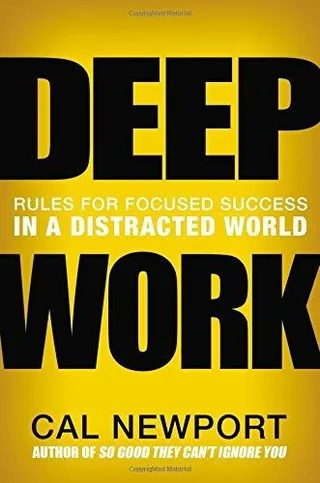 Deep Work: Rules for Focused Success in a Distracted World91.5
 How to Take Smart Notes90.5
 Getting Things Done88.5
- Top pick
 Deep Work: Rules for Focused Success in a Distracted World91.5
- Runner-up
 How to Take Smart Notes90.5
Scores are editorial, not benchmark results or user ratings; an asterisk marks a publisher connection with a disclosed ranking adjustment. How the order is set.
- 1
Deep Work: Rules for Focused Success in a Distracted World
The clearest argument for protected focus time, with rules readers can apply at work. It is aimed at knowledge workers and has no free edition.
Best for Protecting focus time at work
Print, AudiobookPaid
- 2
How to Take Smart Notes
The most detailed note-taking method here, a Zettelkasten system for linking notes and writing from them. It takes practice and is not a task manager, so it suits writers and researchers.
Best for Zettelkasten notes and research writing
PrintPaid
- 3
Getting Things Done
A complete capture and review workflow for tasks and commitments, with concrete steps for each part. It is about task systems rather than attention or notes, so it complements Deep Work and Smart Notes here.
Best for Capturing and organizing tasks
PrintPaid
- 4
Digital Minimalism: Choosing a Focused Life in a Noisy World
A clear argument for spending much less time on personal technology, aimed at general readers. It is about values rather than methods, so it ranks below Deep Work for practical focus rules.
Best for Less personal technology and more focus
PrintPaid
- 5
Building a Second Brain
A digital note system built around four steps, with examples in common apps. It is tied to digital tools and sells courses alongside the book, so it is more tool-driven than Ahrens.
Best for Digital notes and reuse for knowledge work
Print, AudiobookPaid
- 6
Make Time
A four-step daily routine for choosing a priority and protecting time for it, with a companion site. It covers daily planning more than long-term goals, so it complements Atomic Habits rather than replacing it.
Best for Daily priorities and focus routines
PrintPaid
- 7
Atomic Habits
A simple four-step framework for routines that is easy to start, available in print, Kindle and audio. Its advice is general, so it covers habits better than projects or teamwork.
Best for Building routines with small changes
Print, Kindle, AudiobookPaid
- 8
Essentialism: The Disciplined Pursuit of Less
A philosophy of choosing fewer, more important commitments, with a clear three-part structure. It is about priorities rather than methods, so it ranks below the methods books here for practical use.
Best for Choosing fewer, more important commitments
PrintPaid
- 9
Four Thousand Weeks
A philosophical counterweight to time-management systems, arguing for accepting limits. It offers fewer practical steps than the other books here, so it ranks lower on usefulness.
Best for Reconsidering time and priorities
Print, AudiobookPaid
- 10
Pragmatic Thinking and Learning
A readable look at how memory and attention work, aimed at technical learners. It is not a productivity or note-taking system, so it scores lowest for this category.
Best for How memory and learning work for developers
PDF, EPUB, Kindle, PrintPaid
At a glance
| Product | Score | Price | Formats | Level | Free to read online | Main focus |
|---|---|---|---|---|---|---|
| Deep Work: Rules for Focused Success in a Distracted World | 91.5 | Paid | Print, Audiobook | Intermediate | No | Focused work without distraction |
| How to Take Smart Notes | 90.5 | Paid | Intermediate | No | Linked notes and writing from research | |
 Getting Things Done | 88.5 | Paid | Beginner to intermediate | No | Capturing and organizing commitments into next actions | |
 Digital Minimalism: Choosing a Focused Life in a Noisy World | 87.0 | Paid | Beginner | No | Reducing personal technology use | |
 Building a Second Brain | 86.5 | Paid | Print, Audiobook | Beginner | No | Capturing and reusing digital notes |
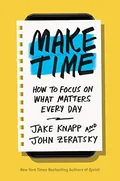 Make Time | 85.5 | Paid | Beginner | No | Daily priorities and focus routines | |
 Atomic Habits | 85.0 | Paid | Print, Kindle, Audiobook | Beginner | No | Building routines through small changes |
 Essentialism: The Disciplined Pursuit of Less | 84.5 | Paid | Beginner | No | Choosing fewer, more important commitments | |
 Four Thousand Weeks | 83.5 | Paid | Print, Audiobook | Beginner | No | Accepting limits on time and attention |
 Pragmatic Thinking and Learning | 72.0 | Paid | PDF, EPUB, Kindle, Print | Intermediate | No | How memory and learning work |
How to choose productivity and note-taking books
- Main problem
- Deep Work and Four Thousand Weeks address attention; the note books address capture and reuse of information.
- Note tools
- Ahrens works with any notes tool, while Building a Second Brain assumes a digital workflow with named apps.
- Routines
- Atomic Habits gives a short four-step framework for changing behavior, the most direct starting point for new habits.
- Learning
- Pragmatic Thinking and Learning is about how the mind learns and fits technical readers best.
What the scores weigh
- Practical method and steps
- Clarity of writing
- Fit for knowledge work
- Depth beyond tips
- Access and price
Scores are editorial, from 0 to 100, and use these criteria. Full method · Disclosure
About productivity and note-taking books
Books in this category mostly describe a method, a mindset or both. Deep Work and Four Thousand Weeks focus on attention and the limits of time. How to Take Smart Notes and Building a Second Brain describe how to capture, link and reuse notes. Atomic Habits builds routines, and Pragmatic Thinking and Learning explains how learning works. Getting Things Done describes a task-capture system, Digital Minimalism and Essentialism argue for less technology and fewer commitments, and Make Time offers a daily routine.
Note-taking has moved toward digital systems. Building a Second Brain assumes an app-based workflow, while Ahrens describes a Zettelkasten of linked notes that works with any tool. Getting Things Done is the one formal task system here, and the other titles are about attention, notes and habits.
Most of these books are paid, and none is fully free online. Sample chapters, appendix PDFs and free previews on the author sites are useful before buying. The scores below are editorial judgments against the criteria, not measurements.
Frequently asked questions
- Which productivity book should I read first?
- Deep Work is the clearest starting point for protecting focus time. Atomic Habits is a simpler starting point for readers who want to build routines first.
- What is the best book on note-taking?
- How to Take Smart Notes gives the most detailed method, based on linked notes and writing from them. Building a Second Brain is an alternative for readers who want a digital workflow.
- Are any of these books free to read?
- None of the ten books is fully free online. How to Take Smart Notes offers a free first chapter and an appendix as PDFs, which is a useful preview before buying.
- Which book is about time and its limits?
- Four Thousand Weeks argues for accepting limited time rather than chasing a complete time-management system. It suits readers who feel overwhelmed by an endless to-do list.
Related rankings
- Best AI and machine learning books13 products ranked
- Best career and future-of-work books12 products ranked
- Best computer architecture books11 products ranked
- Best industrial automation and manufacturing books9 products ranked
- Best music theory books12 products ranked
- Best personal finance and investing books12 products ranked
- Best programming books11 products ranked
- Best reinforcement learning and edge ML books10 products ranked









Tools for choosing productivity and note-taking books
All tools- FinderAlternatives finderType the name of a product you already use, and the finder lists the other products from the same rankings in ranked order. Free-only and open-source-only filters narrow the list, and links lead to the product's full alternatives page and to comparison pages.
- FinderSoftware finderThe software finder searches the products in the rankings on this site. Choose a kind, category, platform and price rule, and each result shows its best rank. The results are server-rendered, so the form works without JavaScript.
Learn more
Learning Center 1:11How to pick a book worth your timePick a book by the question it must answer, its level, its edition and a sample chapter, before you buy it or read the reviews.
 1:17How to decide between two good optionsSettle a close call by sorting it by how hard it is to undo, setting a deadline, scoring the criteria as a tie-breaker and writing down why you chose.